The 250th anniversary of our nation makes me think about inheritance.
Not the inheritance of wealth or property, but the inheritance of a country. Every generation receives an America shaped by those who came before them. Some inherit the freedoms that others fought and bled to secure. Others inherit barriers that have yet to be dismantled.
I inherited both: a country that has too often fallen short of its ideals and a legacy of people who never stopped believing those ideals were worth fighting for.
As America marks 250 years of independence, many people are asking what exactly there is to celebrate. Given the state of our democracy, that’s an understandable question. But it is not a new one. Americans have long wrestled with the gap between our nation’s founding ideals and its lived reality.
I was born in 1954, at a time when America’s democratic promise of equality remained out of reach for many Americans. The son of a maid and a yardman, I was raised in Sunnyside, a historically Black neighborhood in Houston that, for generations, received little public investment. Many would have looked at the circumstances of my birth and seen limited possibilities for my future. The people who raised me refused to see those limits as my destiny.
They believed deeply in education, hard work, and serving others. They taught me that dignity isn’t determined by what you have, but by how you live and how you treat other people. Those values shaped my life in public service, from the Houston City Council to the Texas Senate and today as a Harris County Commissioner.
Just 50 miles south of where I grew up, in the city of Galveston, enslaved Texans learned they were free more than two years after the Emancipation Proclamation and nearly 90 years after the Declaration of Independence.
I’ve spent much of my life thinking about the distance between those moments—not just the miles between Houston and Galveston, but between America’s founding ideals and its lived reality. The Declaration proclaimed that all people are created equal, yet that promise excluded Black people, Indigenous communities, Hispanics, women, and countless others. America has never fully lived up to its ideals, but generation after generation has worked to close that distance.
More than 170 years ago, Frederick Douglass asked what the Fourth of July meant to enslaved people denied the very freedoms it celebrated. He wasn’t rejecting America’s founding principles. He was insisting that the nation finally honor them. Douglass understood that ideals of the Declaration were not self-executing. Every generation would have to decide whether those ideals belonged only to some Americans or to all Americans.
Generations of Americans have answered that challenge through action. From abolition to women’s suffrage, from the Civil Rights Movement to the many movements that followed, ordinary people expanded the promise of American democracy. They organized, marched, voted, litigated, governed, and refused to accept that freedom and equality belonged only to a few. That is one of America’s greatest inheritances.
Today, that same struggle continues. The Supreme Court has steadily hollowed out the Voting Rights Act, while here in Texas, mid-decade redistricting has diluted Black and Latino voting power The Texas Education Agency’s takeover of the Houston Independent School District and approval of curriculum that distorts the history of slavery seek to narrow what students learn about our past. Immigration enforcement has spread fear in communities across the country, reminding us that democracy is weakened whenever government decides whose voices, histories, or humanity matter less.
These are not isolated political debates. They are coordinated efforts to restrict freedom and weaken the multiracial democracy so many before us struggled to build.
Every generation has been given reasons to lose hope.
Enslaved people had those reasons. Women denied the vote had those reasons. My parents had those reasons. Countless Americans who fought for justice had those reasons.
Yet instead, they chose the work. They organized. They served. They voted. They challenged unjust laws. They built institutions. They believed America could become more faithful to its own ideals—not because history guaranteed it, but because democracy depends on ordinary people refusing to give up.
Now it is our turn.
The next 250 years of the American experiment will not be shaped by presidents, Congress, or courts alone. They will be shaped by what each of us chooses to do.
Register voters and vote in every election—local, statewide, and national. Attend school board, city council, or county commissioners court meetings. Support organizations defending voting rights and legal advocacy. Teach the truth about our history. Organize in your neighborhoods. Mentor young leaders. Run for office. Hold elected officials accountable.
Tomorrow, the fireworks will be over.
The work won’t be.
That has always been America’s greatest tradition—not simply celebrating freedom, but expanding it. The country the next generation inherits will depend on what we choose to build today.
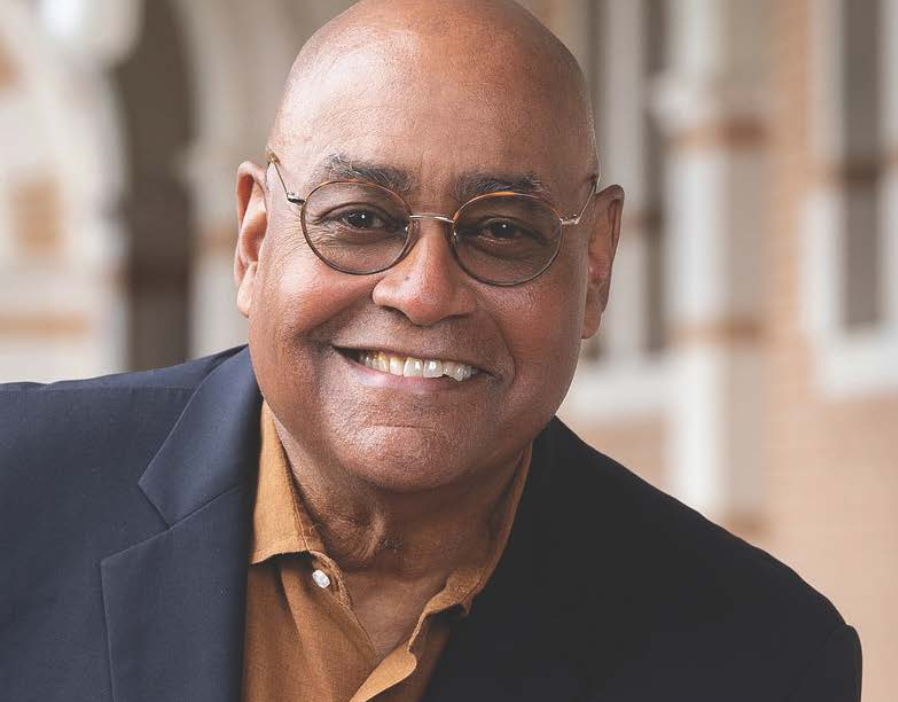
Harris County Commissioner Rodney Ellis is a Houston native who has served his community in elected office for 42 years.