“I don’t want to die, please don’t let me die.”
That is a plea that no doctor in Texas ever wants to hear from their pregnant patient.
But Dr. Todd Ivey, a Houston-based OB-GYN, says it’s a situation he’s encountered more and more now that women are living under a strict abortion ban from the moment of conception.
“One pregnant patient who was miscarrying looked at me and begged, ‘I don’t want to die, please don’t let me die,’” Ivey told Courier Texas.
“I reassured her, but she was absolutely terrified. She had miscarried too early in her pregnancy for her fetus to survive, and at the time I wasn’t legally allowed to perform an abortion because her fetus still had a heartbeat.”
It was only after the patient developed a dangerous infection in her uterus that Ivey was finally permitted to terminate her pregnancy and save her life.
The fear of losing their lives is precisely what many pregnant Texas residents say they’ve experienced after four young women died in the state when they were unable to access medically necessary abortions.
Three died while doctors delayed their care for hours as they miscarried. Another, Tierra Walker, was 20 weeks pregnant and suffered from soaring blood pressure that had required multiple hospitalizations, yet was given no option for what would have been a lifesaving abortion by any of the 90 doctors who examined her.
She died in bed of preeclampsia, a serious, persistent high blood pressure disorder, and was found by her son on his 14th birthday.
Two of the dead women were also already moms, while another, Nevaeh Crain, was just 18 and excitedly expecting her first baby when she died of an infection while miscarrying.
Crain had been sent home by two hospitals in the hours before her death, and a third delayed care while they waited to confirm that her fetus had no heartbeat.
She died the day after her baby shower.
Several other women have also gone public with their stories of coming close to death or losing fallopian tubes and ovaries after being refused treatment for unviable ectopic pregnancies or miscarriages.
Others, like Kate Cox and Amanda Zurawski, have challenged the state’s extreme abortion ban in court—and lost.
Cox was carrying a fetus with a fatal diagnosis, and Zurawski spent three days in intensive care while doctors battled to save her life after her water broke far too early and she developed sepsis.
The sepsis scarred her uterus and fallopian tubes so badly that she will never be able to carry a pregnancy again.
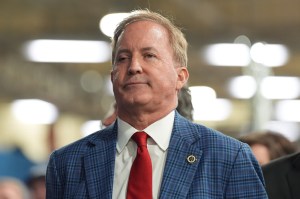
Cox initially received a court ruling allowing her doctor to proceed with an abortion, but then-Attorney General and current Republican Senate nominee Ken Paxton obtained an emergency injunction and threatened to charge any doctor or hospital with a felony if they terminated Cox’s pregnancy.
The penalty for medical providers who perform such “illegal” abortions in Texas is 99 years in prison plus the loss of medical licensing.
Cox fled the state for a termination.
Pregnant patients are afraid—not joyous
These deaths and near-deaths have created an atmosphere where “100% of my patients are afraid” of experiencing complications in their pregnancies, said Dallas OB-GYN Dr. Austin Dennard. “It’s an extra stress to every stage of pregnancy. These laws are stealing the joy out of pregnancy.”
“Women are afraid to get pregnant in Texas. There is a pervasive unease with pregnancy. Women in their 40s with high-risk pregnancies are very afraid. Those pregnancies are fraught with difficulties,” she said.
Dennard herself had to escape the state for an abortion when she learned that her much-wanted third baby suffered from a fatal condition called anencephaly and had no chance of surviving after birth.
“Every day patients tell me that they are afraid to get pregnant in Texas,” said Dr. Damla Karsan, an OB-GYN in Houston. “They say that they’d love to have another baby or ‘I’d love to start my family, but I just don’t know in the current climate if that’s wise, if that’s safe.’”
Houston family physician Dr. Bhavik Kumar said many of his patients have simply decided not to get pregnant.
“The fear is around, ‘What would I do if I were to become pregnant, where would I go, and who would I talk to?’ The idea of having to take time off work and having to leave the state if they ran into complications,” he said. “So their preference would be to not become pregnant.”
Family physician Dr. Lou Rubino, a former lead doctor at Austin Women’s Health Center, told Courier Texas that she personally chose to avoid getting pregnant in Texas.
“There was no way I wanted to be pregnant in that state. No way, because if anything happened and I got sick and wanted the pregnancy to stop, it’s not an option. You either have to get out of the state or you’re going to die. That’s where we’re at, so why would you want to be pregnant?”
Rubino ultimately decided that she could not practice evidence-based obstetrics and gynecology in Texas, and she left to become the medical director of an abortion and reproductive health clinic in Virginia.
A new law hasn’t made it safer to be pregnant
A law passed in 2025, “The Life of the Mother Act”, was written to allow doctors to provide medically necessary abortions to women before they were close to death. But the legislation has not improved outcomes, according to multiple physicians interviewed by Courier Texas.
Dr. Nancy Binford, an OB-GYN in Austin, now sees women in their 20s so afraid to get pregnant that they request tubal ligations. The tubal ligation procedure, often referred to as “getting tubes tied,” offers permanent protection from pregnancy.
“They don’t want to get pregnant in this world,” Binford said.
Statistics validate patients’ concerns. Maternal mortality has risen by 56% in Texas since the state’s first abortion ban in 2021.
“When my pregnant patients ask how they can best protect themselves from being one of those statistics, I tell them that I won’t abandon them, that I will do everything I can to protect their health and safety,” Dr. Karsan said.
But reassurances can only go so far.
“Women are dying. This is not the state in which you want to live and have a pregnancy,” said Yvonne Gutierrez, executive director of the organization Reproductive Freedom for All, who is a fifth-generation Texan but currently lives outside the state.
“A former colleague of mine who’s pregnant said she won’t even take a flight that connects in the state of Texas because she’s worried that if something happened to her, she’d be in a state where she isn’t protected.”
Gutierrez fears for her many cousins of reproductive age still living in Texas. “My entire family is in Texas, and I think constantly about what these abortion bans mean for the people I love.”
She also knows other Texas women who are living outside the state but “would choose to move closer to family when they decide to have kids. Unfortunately, my friends, who are fellow Texans, don’t feel like they have that option.”
One of Dr. Rubino’s patients chose to pursue an early-stage abortion before traveling to Texas.
She already had children and needed to be there for them. “She wasn’t willing to take the risk that something would happen to her while she was there and she might die. She decided that the safest thing for her to do was to have an abortion in preparation for travel to Texas.”
Amanda Zurawski said that her husband, Josh, has told friends who are planning to start families that, along with plans for where they will deliver and which music will be on their delivery playlist, they also need a plan for how to leave the state if serious pregnancy complications arise.
Mini Timmaraju, president of Reproductive Freedom for All, told Courier Texas that “as a Texan and a mother, it is devastating to watch politicians turn pregnancy into something people fear…every day I think about Texans who now have to question whether it is safe to become pregnant where they live and love.”
“Politicians should not have more power over someone’s pregnancy than their doctor.”