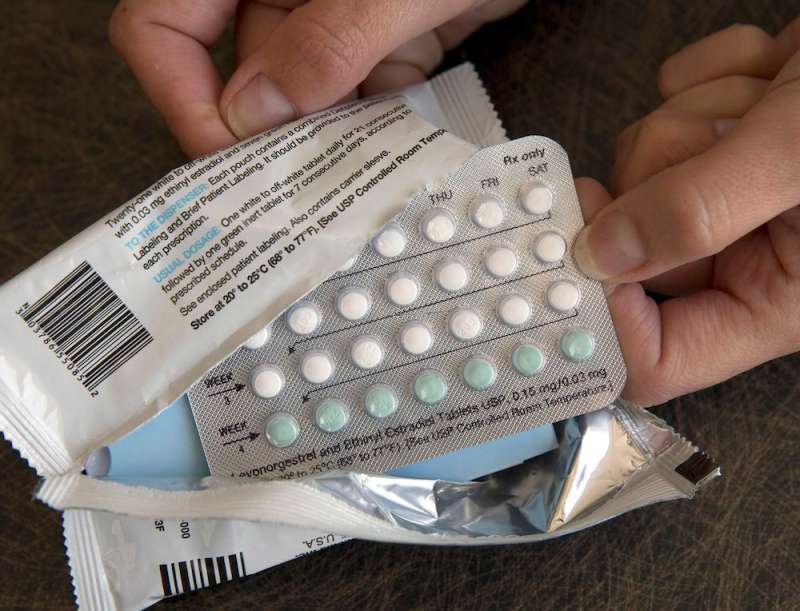
A Louisiana law that reclassified abortion-inducing drugs as controlled substances has made it more difficult for doctors to treat a wide range of gynecological conditions, doctors say.
Now, a similar proposal has been filed in Texas.
Texas Rep. Pat Curry, a freshman Republican from Waco, said the intent of House Bill 1339 is to make it harder for people, especially teenagers, to order mifepristone and misoprostol online to terminate their pregnancies. Doctors in Louisiana say the measure has done little to strengthen the state’s near-total abortion ban, but has increased fear and confusion among doctors, pharmacists and patients.
“There’s no sense in it,” said Dr. Nicole Freehill, an OB/GYN in New Orleans. “Even though we kept trying to tell them how often [these medications] are used for other things and how safe they are, it didn’t matter. It’s just a backdoor way of restricting abortion more.”
These medications are often used to empty the uterus after a patient has a miscarriage, and are commonly prescribed ahead of inserting an intrauterine device. Misoprostol is also often the best treatment for obstetric hemorrhages, a potentially life-threatening condition in which women can bleed to death in minutes. Since the Louisiana law went into effect, hospitals have taken the medication off their obstetrics carts and put them in locked, password-protected central storage.
One hospital has been running drills to practice getting the medications to patients in time, and reported, on average, a two minute delay from before the law went into effect, the Louisiana Illuminator reported.
“In obstetrics and gynecology, minutes or even seconds can be the difference between life and death,” Dr. Stella Dantas, president of the American College of Obstetrics and Gynecologists, said in a statement after the Louisiana law passed. “Forcing a clinician to jump through administrative hurdles in order to access a safe, effective medicine is not medically justified and is, quite simply, dangerous.”
Curry said these restrictions won’t stop doctors from prescribing these medications when necessary, but will stop the “wide misuse” of the drugs to circumvent the state’s near-total abortion ban.
Curry said he consulted with the author of the Louisiana law, as well as OB/GYNs in Texas to draft the bill. He said the doctors who have criticized the legislation are raising these concerns as a “smokescreen” because they don’t want more restrictions.
“I understand that. We don’t need or want all kinds of regulations,” he said. “Especially as Republicans, regulations should not be high on our list, but in this case it’s a necessary evil given the situation.”
Texas roots for a Louisiana law
In March 2022, Mason Herring, a Houston attorney, spiked his wife’s water with misoprostol to force her to have an abortion. Catherine Herring was pregnant with the couple’s third child, a daughter who was born 10 weeks premature. She survived, but has significant developmental delays, according to the Associated Press.
Mason Herring was charged with felony assault to induce abortion, and pled guilty to injury to a child and assault to a pregnant person. He was sentenced to 180 days in jail and 10 years of probation.
Catherine Herring’s experience led her brother, Louisiana state Rep. Thomas Pressly, to file a bill that would have made it a crime to coerce someone into having an abortion.
But at the last minute, the bill was amended to also reclassify abortion-inducing drugs as controlled substances, according to the Louisiana Illuminator, leaving hospitals and doctors scrambling to comply with the new restrictions. The state health department advised storing the medication in a locked area on the crash cart, which at least some hospitals have said is not feasible.
“We had to rework how we utilize misoprostol across our hospital systems,” Freehill said. “Labor and delivery, pharmacy, nursing staff, you name it, they were all involved with figuring out how to stay within the law but still use these medications that we need access to.”
It’s rare for a state to decide on its own to classify a drug as a controlled substance. Most commonly, the federal government decides which medications should be “scheduled,” based on their medical usefulness and the potential for abuse. Schedule I drugs, like heroin, have no medical use and are often used recreationally; Schedule IV and V are medications that are useful but have a potential for abuse, like Xanax or Valium.
There are enhanced penalties for having a controlled substance without a prescription, and increased restrictions on how doctors can dispense them. Pharmacists must report any prescriptions for controlled substances to the state Prescription Monitoring Program, and doctors are required to check the database before prescribing certain controlled substances. Law enforcement also has access to that database.
Prescription monitoring has been key to combating the opioid epidemic by identifying doctors who were overprescribing and patients who were getting prescriptions from multiple providers. But with so much political attention on mifepristone and misoprostol as abortion-inducing drugs, doctors are worried about scrutiny for frequently prescribing these common medications.
“We had to fix a problem that wasn’t broken,” said Freehill. “There’s no reason for it to be Schedule IV. It’s not something people abuse. It’s not something people can become addicted to. It’s extremely safe.”
A group of Louisiana health care providers recently filed a lawsuit arguing the law discriminates against people who need mifepristone and misoprostol for other conditions, and challenging whether the last minute amendments to the bill were proper. Louisiana Attorney General Liz Murrill has said the new restrictions are clear and should not delay care. Those who “have attempted to sow confusion and doubt,” she said in a statement, “profit from misinformation.”
When the law first went into effect, Anna Legreid Dopp, senior director of government relations for the American Society of Health-System Pharmacists, told CNN that the group expected other states to consider similar measures.
“Almost immediately, our members raised concern that if this is being done in one state, it can easily be a template for other states to use it,” Dopp said.
Restrictions on medication
Curry, who recently won a special election to fill the seat long held by Republican Rep. Doc Anderson, said Pressly and Herring have offered to come testify in support of his bill this session. He anticipates it getting wide support from his fellow lawmakers.
Since the overturn of Roe v. Wade, conservative groups have turned their attention to restricting access to abortion-inducing medications. A group of anti-abortion doctors filed a lawsuit to revoke the Food and Drug Administration’s approval of mifepristone, which the U.S. Supreme Court ultimately rejected.
Curry said there are reasons to keep these medications on the market beyond abortion, but they need tighter restrictions.
“You can lie about your age, you can lie about your name, you can lie about your address, there’s no verification whatsoever,” he said, referring to online prescribers. “And it gets shipped to a 15-year-old girl, a 13-year-old girl.”
It is already a crime to mail abortion-inducing medications in Texas, and many of the online pharmacies operate in a legal gray area outside U.S jurisdiction. Others are working in states that have “shield laws” that protect doctors’ ability to prescribe and mail pills into states that have banned abortion. None of these interstate and international legal questions have been tested in court with regards to abortion.
Freehill said she would encourage Texas doctors to learn from what has happened in Louisiana as they prepare to advocate against this bill this session.
“There’s a lot of education that needs to be done surrounding what this means and what these drugs are really used for,” she said. “I don’t know that we would have been able to sway people, even with more time, but we can at least educate on why this is completely inappropriate and really governmental overreach.”